Friday, July 21, 2017

Funny you should ask: "Why do the trains have to lay on the horn in the middle of the night?"


"A critic is a gong at a railroad crossing clanging loudly and vainly as the train goes by." Christopher Marley

It's a common town peeve: it's the middle of the night and the train is creeping its way through town when all of a sudden you're awoken from your much needed deep REM sleep by the blast of a train horn. We accept that the driver has to blow his horn upon coming to an intersection but why does it seem that more often than not he's literally laying on the horn? And as long as we're talking about it, why is it that from time to time they leave an engine idling all night long? Can't they just turn the thing off and start it back up in the morning?

Well, funny you should ask. I was just asked these two questions (again) not too long ago so I thought I would try and get a hold of someone at Progressive Rail and see if I could get some answers. On my first phone call, I got a real person (whose name is Joe) and asked him if he could respond to these two common complaints.


Delivery to ABC Truss
Why do the drivers have to blow the horn in the middle of the night?
Federal regulations is the short answer to that question. According to 49 CFR Part 22 (otherwise known as the Train Horn Rule), “locomotive engineers must begin to sound train horns at least 15 seconds, and no more than 20 seconds, in advance of all public grade crossings” regardless of the time of day. As Joe explained to me, every engineer is required not only to sound his horn before arriving at the crossing but until his engine has passed entirely through the intersection. What's the reasoning behind this rule? Simple: to prevent accidents. “Just the other day a driver in plain day drove into the side of a train in Faribault, Minnesota. So, if that happens in the daytime just imagine the risk at night?” Apparently “distracted driving” is a probable cause of this accident but the number one safety issue that Progressive deals with, as you may have already guessed, is intoxicated drivers. Joe acknowledged most of the drivers who drive at night are the newer guys so perhaps they err on the side of caution by laying on the horn a little longer than perhaps federally mandated (not, as you might think, to antagonize the locals).


Why can't they just turn the engine off rather than allow it to idle all night long?
“We get asked this question all the time,” says Joe, “and frankly, it's a NIMBY question (i.e. “Not In My Back Yard”). In other words, for every person who believes that they are being inconvenienced by the sound (and feel) of an idling engine all night would they rather they move the thing in back of someone else's house to do the same? I know for a fact that the person who asked me this question wasn't asking that. They were just wondering why can't they just turn the thing off and, like a car or a truck, start it up in the morning? Well, a train engine is not like your family car and from what I gathered from Joe's explanation is that it's just cheaper to keep it running rather than uncouple it from the cars it's pulling and park it in a quiet place somewhere. “The majority of the time, the train will pass on through after picking up or dropping off its load,” Joe informed me. “But once again we're bound by federal regulations that state that for every 12 hours of work, railroad employees are entitled to 10 hours of rest.” He's referring to the Hours of Service Act that was amended in 1971 because of longstanding complaints that crews were not getting adequate rest which was a factor in many accidents. Since that time railroad crews are limited to 12 hour shifts that must be followed by “10 hours of undisturbed rest” in a 24 hour time period. So, on the occasion that an engine is left to idle all night it's more than likely because of that rule. They have to rest their guys and if it happens that they're in town when their shift expires, well I guess that's the luck of the draw.

So, the long and short of it is this is the cost of doing business. Regularly the trains pass through Chetek delivering lumber to ABC Truss or hauling telephone poles from McFarland Cascade outside of Cameron or carrying sand to one of the many wash plants south of town. All this means jobs for local people, who live in houses and pay property taxes, who buy their gas and their groceries and eat out from time to time at our local restaurants. I guess when you frame the question that way the sound of silence might not be a good sound after all.


Do you have a question about stuff going on in town or about an ordinance you think is unnecessary? Message me at my Facebook page (Jeff Martin, Mayor) or at chetekmayor@cityofchetek-wi.gov. I may not know the answer but I probably can find out.


Thursday, July 13, 2017

Wouldn't it be great...

...if Chetek had its own splash pad?

It's good to have fun but you have to know how.” - Dr. Seuss

Have you heard the news? Cameron's got a splash pad. A what? A splash pad – you know, a slab of concrete in a park with jets that shoot out water so that kids can run and play in? Okay, this isn't a scoop. It's actually old news. The village put that in back in 2015 but if you're a kid (or a parent of one), what a treat to have in your own backyard or a backyard near you.


Someone could make the argument that Cameron needs a water park venue as they don't have a pool or a lake like we do for their kids to cool down in during the summer months. True enough. But as much as we are blessed by living on Lake Chetek it's something of a mixed bag, isn't it? Come late July and early August the water turns a particular shade of green that won't stop the fishing or the water skiing but sure seems to put a damper on the swimming. (In the early '90s I did the one and only baptism I've ever done in Lake Chetek. There's something wrong about dunking someone in the 'cleansing waters of baptism' and then urging them to quick shower off before they come down with a case of duck lice.)


The beauty of a splash pad is that there is no standing water which eliminates the need for a lifeguard let alone the necessity of knowing how to swim. (Remember the days when swimming lessons were offered at City Beach? I sure do.) In my opinion, Guy Spiers Park used to be a dumpy little park on Cameron's west end. Now, it's a little gem of a venue complete with splash pad, pavilion and bathrooms. For the sum of $2/day so long if its over 60 degrees your child can splash to his heart's desire (apparently they don't open if it's cooler). The village pays for a staff person (a teenager) to man it and collect the entrance fees and even offers some concessions (for a fee as well).


Everyone wants one of these things.
What does a splash pad cost and how did they fund theirs? City Inspector Joe Atwood did a little sleuthing for me and found out that Cameron paid $160,000 for theirs. According to Joe, the village contributed $60K but the rest was raised by donations. Could we put something comparable in ourselves by a similar equation (i.e., part city contribution, part private donation)? And if we could figure out the math just where would we put the thing? Why not Philips (Beach) Park? Our pavilion is in need of an upgrade anyway. Could we build a new one to the west of the present one and put our new splash pad right next to it on the hill above the beach (in the place where the old playground stood?)


Back in May at the irregular meeting of the Parks Committee just for fun we kicked this idea around but one of the sticking points was a legitimate safety concern about kids running back and forth between a splash pad on the hill and the playground equipment at the beach while having to cross Lakeview Drive. What if we closed Lakeview Drive permanently and rerouted traffic down City Park Drive (the street behind the pavilion where you always register for the Fishy Four)? I know this idea has come up before. Maybe we need to revisit this again?


I realize all of this is pretty much daydreaming on my part. One of the real needs we have right now, however, is for individuals, especially parents of young children, who would be willing to be a part of our Parks Committee for a temporary season of time to help us think about the future of Philips Park as well as Southworth Park across the road. Together I bet we could come up with an even better plan than the one I'm pitching here. Who'd like to join me? Message me here or at Jeff Martin, Mayor on Facebook if you'd be interested in serving. I'd love to hear from you!


It's just a thought. Maybe you got a better one?

Tuesday, July 4, 2017

Funny you should ask: "Why can't the VFW get a liquor license?"

The most common question I get asked as mayor is, “How's the mayor-ing going?” but from time to time I do get a legitimate query that perhaps more than one person wants to know the answer to. Recently I was asked this question, “There is supposedly a liquor license available so why not let the VFW have it? These men and women have defended our country for countless years it's the least we can do for our local VFW members.”

Its a reasonable request, isn't it? If the city has an available liquor license why not let the vets have it? Except we don't. That's the short answer to this individual's question - we really don't have an extra license just laying around for the taking – or the buying. And why is that? Why don't we just have intoxicating beverage licenses available for anyone willing to purchase them? To answer that question requires a little bit more explaining.

If you go to our city's website and click on the 'government' tab, you'll find the 'Code of Ordinances', the laws by which we live by. Chapter 10 is all about Alcoholic Beverages and it's a pretty long one. Within it, you find (among many other clarifications):

A great resource

  • Section 10-23: You have to have a license to sell alcoholic beverages.(Well, you probably already knew that but just so you know.)
  • Sections 10-24 thru 10-26: There are various “classes” of licenses (And this gets to the heart of why we can't offer the vets a liquor license.)
    • Class A”: Think “A as in away”. You can sell the booze and the customer can walk away from the premises and consume it so long as its in its original container. The city sets the quota of how many licenses are available and it's currently at 3: Kwik Trip, Gordy's and Keg 'n Kork. These establishments apply for this license annually and the council approves them. (I'm told that the council can't just 'cancel' a license without a proper revocation hearing. In other words, you gotta have a good reason for canceling it.) These cost $300/year.
    • Class A Fermented Malt Beverage/Wine Coolers”: Just like the “Class A” license, you can buy your six or twelve pack and go home with it. The city also sets the quota for these licenses and that number is currently 4: Kwik Trip, Gordy's, Chetek's Express and Keg 'n Kork. These also are approved by the council and the going rate is $50/year.
    • Class B Fermented Malt Beverage”: Like it says, this is a “beer only” license for establishments that allow you to sit down and enjoy a cold one or take a 12-pack home. The city allows 4 of these, two of which are currently available. The other two have been issued to the American Legion and the VFW. These cost $50/year as well.
    • Class B Intoxicating Liquor”: In the world of liquor retail sales, these are golden. If you own one of these you have the ability to sell both beer and the hard stuff at the relatively princely sum of $600/year. But unlike the other quotas which are set by the city council, the State sets the limit based on a formula that factors in our population. At the present time – and more than likely for a long time to come – based on that formula we are only allowed 5 Class B Intoxicating Liquor licenses: Red's, Phil's, B&B, Mary's and Indianhead.

"Back in the day"
If Indianhead has not been open for two years why do they continue to be issued a valuable liquor license? For the simple fact that the current owner – Linda Homme – continues to apply for it and pay the fee. And why does the council continue to issue it to her even though she hasn't sold a drop of hooch in two years? The reasoning is simple: she is trying to sell the place as an establishment that has a Class B Intoxicating Liquor license which gives her property value (a sale is currently pending on the place.) Honestly, if, for whatever reason, the sale fell through the best way for the vets to get the license they'd like is to buy the place from her.

So, that's why we can't offer the vets a Class B Intoxicating Liquor license – there isn't one currently available. The only way to fix that problem is for our city's population to grow over 2,500 which probably isn't going to happen any time soon. 

Happy 4th everyone and please celebrate responsibly!


Friday, June 30, 2017

High Marks: The State-of-the-Waste Water Treatment Plant


2016 Waste Water Treatment Plant
Report Card
Categories
Grade
Influent Flow and Loading
C
Effluent Quality: BOD (Biochemical Oxygen Demand)
A
Effluent Quality: TSS (Total Suspended Solids)
A
Effluent Quality: Phosphorous
A
Biosolids Quality and Management
A
Staffing
A
Operator Certification and Education
A
Financial Management
A
Sanitary Sewer Collection Systems
A
GRADE POINT AVERAGE (GPA)
3.81


At June's City Council meeting, Chetek Waste Water Treatment Plant Operator Mike McGinnis gave his last annual “State-of-the-Treatment Plant” presentation and once again the plant gets fairly good grades. Every year the DNR requires waste water treatment plant operators to complete a Compliance Maintenance Annual Report (or CMAR) for the municipality it serves. It's a self-evaluation tool that helps the city stay on top of how well our plant is operating and assess what we have to do – if anything – to make it work better.

As the report shows, we received top marks in every category last year except “influent” (we received a “B” in that category in 2015). Before addressing that issue, let's make sure we know what we're talking about:

The "auger" at the front gate of the plant.
All the water comes in through here.
● “INFLUENT”: It means “what comes in” to the plant. On a normal day, depending on the weather, the plant processes approximately 385,000 gallons of dirty water. Heavy rains affect that monthly average. In 2016, in both June and July, we averaged between 500-550,000 gallons a day which is way beyond our plant's normal capacity contributing significantly to our low grade. But we've got a fix for that (more on that later.)


Inside the "igloo"


● “EFFLUENT”: (or what goes out into the Chetek River) is broken down into three different categories:
  • BOD (or Biologial Oxygen Demand) is the most commonly used measurement of wastewater, usually expressed in milligrams, that essentially shows how much dissolved oxygen is needed by the “critters” in the RBC units (i.e., the proverbial “slime on the rocks”) to break down the organic material in the water. It's a little more involved than that but it's sorta like golf – the lower your score, the better job your plant is doing.
  • TSS (or Total Suspended Solids). All wastewater usually contains large quantities of suspended solids that are both organic and inorganic in nature. These solids are measured as Total Suspended Solids (or TSS) and are also expressed in milligrams per liter of water. As with BOD, the lower your score the better off you are.
  • Phosphorus is the “big ticket” item today that has everybody talking, especially in the Red Cedar River valley. The DNR wants to make sure that we're doing our best to remove as much phosphorous as possible from the water before it reenters the Chetek River. Given just how much of the stuff is “out there” in the Chain, to say nothing of the surrounding land, that's a pretty tall order. But as Mike's report clearly shows, we continue to meet acceptable State levels.


So why is it a perfect 4.0 report continue to elude us (we graded out an F in Influent in 2014 and a B in 2015)? Simple: on top of all the dirty water we're processing we're also treating hundreds of thousands of gallons of otherwise clean groundwater. Our pipes leak and way too much water that never needed to be treated to begin with is handled by our plant. On the up-side, a lot of this water is fairly diluted already but on the down-side, the deluge of water that comes in short-circuits the process by which our water is treated. In a perfect world, wastewater spends between 4 and 5 hours at the plant before it reenters the river but on certain days its pushed out way before then without getting what Mike likes to call its “final sun tan”, wherein the water is treated with ultraviolet rays, making whatever bacteria is left within it essentially sterile. We applied for a grant to help us re-line the offending sewer pipes as well as replace the Fine Screen at the plant and we're awarded it. It won't pay for everything but it sure is a nice hunk of what we'll end up owing. This work probably will happen this fall.

Mike trying to explain to the Mayor how the thing works

In the mean time, Our Man Mike will continue to man his post making sure our old plant keeps running as effectively as a 35-year-old facility can. At least until September when Mike plans on retiring. Talk about the end of an era. We are all grateful for his ongoing oversight of one of the most vital operations within our community.  

Wednesday, June 28, 2017

Sheer "folly": Why I'm for the Waste-to-Energy Facility

Cartoon lampooning the 1867 treaty
with Russia that got us Alaska
Admiral Fox, on his return from his visit to Russia, told a friend in this city that Prince Gortschakoff had said to him in St. Petersburg that the territory which Russia owned in America was not only valueless to his Government, but was an expense and trouble which the Czar would gladly be rid of, and assured him that Russia would be willing to cede the territory to the United States as a gift if it were desirable to the Republic. This is certain. It is equally certain that Secretary Seward knew of the fact. Unfortunately for our Treasury and our tax-payers, there is no diplomatic glory to be got out of accepting a gift.” New York Tribune, April 9, 1867


They called it “Seward's folly” and “Seward's icebox”, the treaty Secretary of State William Seward negotiated with Russia in 1867 that for the princely sum of $7.2 million dollars (or roughly 2 cents an acre) we end up with Alaska. What a waste of the taxpayers' money, some claimed. What a dumb, short-sighted idea, others mocked. Clearly, posterity views that moment in history a little different than some of the folks back then did. A few weeks ago, the Barron County Executive Committee sent shock waves through the area when they announced that they had voted unanimously to shut down the Waste-to-Energy facility (aka, “the Barron Co incinerator”) in Almena in 90 days. Their primary motivation for doing so is simple: the Waste-to-Energy plant is losing money which creates a strain on the county's budget. What's more, it's in need of serious upgrades. Might this be the time to get out of the trash-burning business?


The incinerator was opened in 1986 at a cost of little over $6 million and by county ordinance all the trash in the county has been going there ever since averaging out to 100 tons a day. The stuff is
This is something like a Star Trek replicator...sorta
burned and then converted into steam which is sold to Saputo Cheese, the fourth largest cheese maker in the world, who just completed a major addition to their plant right across the road. It seems almost symbiotic, doesn't it? We make the garbage, the plant burns it, converts it into electricity which Saputo buys to make their cheese. How cool is that? When we moved to Chetek back in 1991 my dad jokingly began referring to me as a “jack pine” savage living up here in the woods. My folks live just outside of Madison, the city of the perpetually offended, and in a county that likes to see itself as progressive and environmentally friendly. And yet where does Dane County's garbage end up? In a hole in the ground. And they call us “savage”!


Dane County landfill
The fact of the matter is our Waste-to-Energy facility is the only one of its kind in the entire state (La Crosse has an incinerator as well but that is owned by Northern States Power). Everybody else is sending their trash to a landfill somewhere. We're a small county with approximately 45,000 residents generating 35,000 tons of garbage each year. Imagine more populous counties like Dane, Milwaukee, and Brown and the kind of trash created in those places! Yet all of their unrecyclable garbage is headed to a hole. So are we dumber than a box of hammers to stick with a technology that works but is also pricey to use or are we smarter than the average bear? I'd like to think the latter. Not only does it resonate with our society-wide felt desire to live more environmentally friendly lives but in the long run its financially less risky.


Why isn't everyone burning their trash? Simple: it's cheaper to send our garbage to a hole. Way cheaper. But here's the thing: the conventional wisdom on landfills are that there are essentially two kinds: one's that leak and one's that will leak. And when they leak someone is gotta pay for the clean-up and the way the law is written that someone is us. In other words, when we choose to bury our garbage instead of burning it, we own it forever. The Resource Conservation and Recovery Act (RCRA) was passed in 1976 as an amendment to the Solid Waste Disposal Act of 1965 because of growing national concern over the improper management of both hazardous and non-hazardous waste. Buried within this piece of legislation was the establishment of a overarching management system called, appropriately, Cradle to Grave. What it means is that even when you send your garbage away to be land-filled you still own it. It may be out of sight and out of mind but if that landfill fails - and we are reasonably promised that at some time, it will - your municipality is on the hook to help pay for the clean-up. Speaking only for Chetek in my mind this sounds eerily like the Central States' Pension Fund fiasco: it doesn't matter that we did nothing to cause that fund from failing but we're still liable, says the Teamsters, to pay for our fair share of the red ink it's drowning in. 

The W-2-E facility is going to need a new stack
Whether we burn the trash or bury it, we're going to have to keep paying to have our garbage disposed of. There is, after all, no free lunch. At last Tuesday night's County Board meeting, County Administrator Jeff French made the argument that a big reason that the Waste-to-Energy facility continues to lose money is that the tipping fees, the fees paid to the county to get rid of our garbage, are way too low and need to be adjusted. If the county board heeds his advice, our garbage fees will be going up. So, if you notice a change in your bill in the next few months you'll know why. If the Executive Committee, however, is insistent that the best thing to do is to shut her down, Chetek and every other municipality in the county is going to have to contract with, presumably, the Sarona landfill as well as adding a liability fee of some kind in the eventuality that the thing fails at some unknown date in the future.


I've been coaching Cross Country at the high school for nine seasons now. Several years ago I had the joy of coaching a young man with autism. Alex would have these “mantras” he would repeat regularly at practice that I came to refer to as “Alexisms.” “Difficult things are hard,” he would say (and isn't he right?!) One of the Alexisms I think on a lot is “It's not good to be dumb.” You're so right, Alex. As the county considers what to do with the Waste-to-Energy facility, whether to shut it down or fix what needs to be fixed, the hope is they'll keep the long view in mind and do what's economically right and environmentally sound for us now and for our posterity. 

If we don't burn it, it'll be going in the ground somewhere
and some of this stuff will be there a thousand years from now

Monday, June 26, 2017

CQD: The failing Central States Pension Plan and what the City is going to do about it

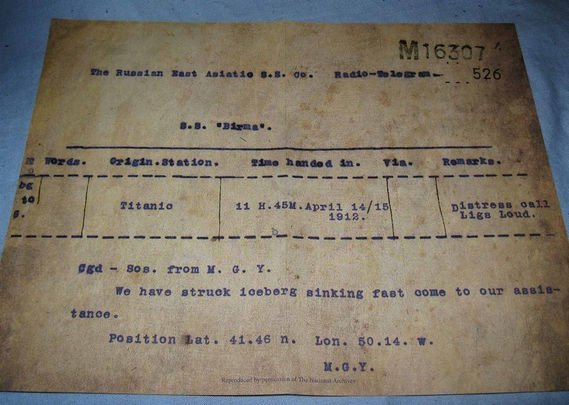
Last telegraph out from Titanic
CQD. CQD.” - the distress code sent out by the telegraph operator aboard the RMS Titanic on April 14-15, 1912 which means “all stations: distress” (it was only after the sinking of Titanic that SOS became the universal Morse code of distress)


On April 14, 1912 the RMS Titanic collided with an iceberg and within a few short hours the unthinkable occurred: the reportedly unsinkable boat lay in pieces at the bottom of the Atlantic. Central States Pension Fund, one of the largest pension plans of its kind with over 400,000 members nationwide, including five of our own public works employees, like the Titanic has hit something massive and is rapidly taking on water. In a comparitively few short years the thing will be “sunk”. Currently it is $28 billion dollars insolvent and Congress, unlike in 2008 when they bailed out the auto industry, is planning on doing nothing to stop the catastrophe. With nothing to be done the best possible thing for all parties involved is to make it to a lifeboat before the thing goes under completely. Which is exactly what the City of Chetek is currently doing.


The letter I received

A few weeks after taking office last year I received a letter from Central States informing me in dry legal syntax of the status of the fund and of the unwillingness of Congress to do anything about it. I didn't realize it at the time but essentially it was the equivalent of the CQD distress signal that was sent out repeatedly from Titanic on the night and early morning of April 14-15, 1912. But unlike in that instance there was no Carpathia sixty miles away to race to the rescue. Peel away the legalese and it pretty much reads how Titanic's last telegraph read: 'WE HAVE STRUCK ICEBERG SINKING FAST COME TO OUR ASSISTANCE.' This past April we received the annual assessment of the fund that read very much the same way the previous letter read only to add that their “rescue plan” was rejected by the Treasury Department. Thus we're back to square one and the sea water continues to pour in.


This is not a new problem. This is not a fiasco you can blame on Trump or Obama or even Bush. If only it were as simple as that. This is about a menagerie of things that, yes, include elected officials who appear to lack political courage to do anything and federal judges who seem, at best, indifferent. It has to do with the change in the industry as well as the demographics of the baby boomers who are now exiting the labor force in droves. Back in 1980, for every 5 guys coming into the work force, one was retiring. These days it's totally reversed: for every 5 guys retiring only one guy is coming to work. Even a rube like me understands math like that.


Central States is the pension fund
of the Teamsters
Central States was created to benefit the guys it served who were involved in the transportation and warehousing industries (how our public works' guys became a part of the Teamsters is maybe a question for local historians John Banks or Bill Waite because no one I know seems to have the answer for that.) Which was great until the truck industry was deregulated back in the 1980s. According to one on-line source I read back in the 70s more than six in 10 “for hire” truckers belonged to a union. By 1996 only two in 10 were union members. Again, it's simple math.

Deregulation and competition from nonunion businesses accelerated the declining health of the fund. Throw in union mismanagement, the Great Recession of 2008 and some other series of unfortunate events and we are where we are today. A year ago, Lee Schafer, a columnist for the Star Tribune, wrote an excellent article about Central States wherein he comments,


This fund is going to fail because of an upheaval put in motion more than 35 years ago in the principal industry that employed its participants, trucking and warehousing. That makes this coming crash a little like a truck careening into the gorge after the driver repeatedly blew past “Danger! Bridge out ahead” signs — with the first one maybe 1,000 miles back. (Doomed to Fail)

At the present time, the City takes $155 a week out of the paycheck of our union members (Mike, Joe, Rod, Brandon and Aaron) and sends it off to Central States. Former employee Tim Berning retired in May and at June's council meeting, Waste Water Treatment Operator Mike McGinnis announced he would be retiring in September. Both those guys will receive their pension benefits until the fund is defunct eight years from now. If he wanted to, Joe could retire today and begin receiving his pension check. But Rod, Brandon and Aaron are way too young to do so and yet by law we are required to continue to deduct $155 from their weekly pay check and send it off to Central States. Using Central States' own estimate by the time they are of retirement age that fund will no longer exist and these guys will never see a penny of what is owed them. Ever.

Charlie P. Stevens
So, if our guys will not benefit from that fund why not just quit sending the money in? Why not just jump out of the sinking ship before being sucked under by the undertow? Because we can't. If we were to do that the Teamsters would legally have the right to take us to court and would probably win. The only way out is to cough up and pay our share of the liability. The way Congress wrote the rules a business or (in our case) a municipality can't just “walk” away – or, to continue the metaphor – row away. We have to pay our fair share of the estimated $28 billion dollars of liability. Case in point, in 1997 UPS read the same tea leaves we're looking at now and were prepared to exit stage right. At that time their portion of the liability was approximately $600 million. They reconsidered and continued with Central States for ten more years
We have to eat our piece
of the pie...even if it smells
like you know what
by which time their piece of the pie of liability had grown to – wait for it - $6.1 billion dollars. In 2007 they paid up and took 60% of the entire Teamsters membership with them. An international corporation like United Parcel Service can do some finagling and come up with that kind of cash. We, obviously, cannot. Which is why we retained the services of Charlie P. Stevens, a lawyer with Michael Best & Friedrich LLP out of Milwaukee, who specializes in pension law, to get us out of this disaster as expeditiously as possible.


We began our conversation with Charlie by phone back in April and immediately got an education on just how dire things really are. One of the things I really appreciate about Charlie is that he's plain spoken and is pretty good at breaking down a very complicated legal matter into plain English. Here's a quote for you: with regards to Central States, “Everything they do is diabolical.” Well, that makes you sit up in your chair. In May we invited him to come to our monthly council meeting and get the aldermen up to speed on the situation. We also made sure that all the present employees of the city's public works department as well as those who are now retired from it were aware that he was in town. All of them showed and heard his grim report. When he was done the atmosphere in the council chambers was tense to the say the least.


“Hubris” is a word that we derive from the Greek language describing excessive pride or defiance of the gods that ultimately leads to nemesis. The accepted moral lesson of what happened on April 15, 1912 is that it wasn't an iceberg that sunk Titanic. It was hubris, overweening pride in man's creation of a supposedly “unsinkable” ship that was speeding recklessly through an ice field. And real people died because of it. What Charlie described in council chambers in May is yet another display of hubris. But where Titanic was a tragic yet avoidable accident, the current status of Central States is, frankly, a robbery in slow motion committed by unscrupulous individuals and real people with a Chetek zip code will be affected.


If the ship cannot be righted and the government will do nothing to intervene and prevent the inevitable calamity the only option left to us is to get out as soon as possible. Every day we stay in our piece of the liability pie grows larger. If we don't abandon ship, if we choose to join the band playing away on the deck of the sinking Titanic, when it finally does goes under not only will we owe more but all the money we have already sent in will have been wasted. We might as well have taken that $3,100 a month and literally sent it down the toilet. So, we're getting out – this week.

They were heroic and went down with the ship.
We cannot allow that to happen.


By Charlie's rough estimate, we need to come up with $1 million dollars that we can either pay in installments or in one lump sum. The benefit of paying on the installment plan is obvious – it eases the pain in small monthly doses over the next twenty years. However, the risk in that is that in the meantime Congress will come up with some kind rule that leaves us on the hook to Central States as long as we owe them anything. So better to pay them off in one lump sum and be done with them rather than risk future liability. That's what were going to do. Where are we going to come up with that kind of cash? Well, potentially we have half that amount on hand already between an outlay account for Knapp Haven that's never been touched and the $100K that Atrium still owes us and promises is “in the mail.” We'd have to take out a loan for the rest.

And what about our guys? Are they left floundering in the drink? No. The city will continue to make contributions but through some kind of 457 plan. It would be their money in their account and ultimately would be of more value than just sending money off to Central States where more than half of every benefit dollar paid out goes to retirees whose employers withdrew without ever paying their piece of the pie. What's more, we're not asking the guys whether or not we can do this. We're doing it because we believe its in theirs and the city's best interest but we're not asking for their permission. We're just informing them. If the union threatens to cut them off, well, they can rightly argue according to the rules the union lives by that it wasn't their fault and therefore they are entitled to everything they're due (until, of course, the money runs out.)


It's totally unfair and unjust but we have been reasonably informed that there is just no way to fight this. We would be tilting at proverbial windmills and end up right back where we started except with additional legal costs for our efforts. What were we going to do with the “Knapp” money? We were holding on to it until everything with the sale was totally wrapped up, more specifically with the $100,000 in receivables that Atrium still owes us in our hands. That money could have been reallocated for sidewalk replacement, park improvements, equipment upgrades and the like. It's a darn shame but it appears it wasn't to be. It breaks the heart but to do nothing would be irresponsible and we still have to do the right thing and get everyone to a life boat while we still have time.


Friday, June 2, 2017

Silver linings

"Well, it's been a quiet week in Lake Wobegon, Minnesota, my hometown, out there on the edge of the prairie." Garrison Keillor's standard opening to his weekly monologue when he used to host “A Prairie Home Companion” on Saturday nights.


What Keillor regularly said of his home town could very well be regularly said of ours – except for the last two weeks. Between the EF3 tornado that rolled through the Towns of Prairie Lake and Chetek the week after Mother's Day and the tragic, untimely death of Owen Knutson the week after that – it's almost too much for our little town to bear. So much loss, so many tears. For those immediately affected by storm and accident things won't be back to normal any time soon. Grief, be it the loss of a home or, even more so, the loss of a son, is processed and relinquished personally in its in own, queer way. “This too will pass,” the old ones say and it certainly will. But in its own time. Which means in the mean time we must be patient and be nice to ourselves and to each other while grief works its way through.


Without trying to be trite and pollyanish about any of these things, the silver lining of the storm clouds that have hung over our area recently is that neighbors and strangers have been given ample opportunity to love each other. And have. According to Chetek Chamber of Commerce Event Coordinator (and for all intents and purposes local storm relief coordinator for those living on the east side of Ojaski and Prairie Lakes), approximately 900 volunteers came through our Visitor's Center on their way to roll up their sleeves and pitch in. (This is to say nothing of all those who were shuttled through St. Peter's in Cameron to help with the clean-up at Prairie Lake Estates.) The day after the storm the school shut-down for educational purposes but opened up for a place where workers could get a shower and a meal and teachers were dispersed to help out where they could.


Much beloved Coach Bill “Knicker” Knickerbocker's home and property on the east side of Prairie Lake received heavy damage on account of the tornado. A few days later his wife, Judy, stopped in at the bank where my wife, Linda, works as a teller. When asked how she was holding up, Judy responded that like everybody else in their neighborhood they were doing the best they could but what a blessing it was “when just the other day 40 angels showed up to help (Owen among them).” The ranks of the volunteers were made up of people of faith and people who professed no faith whatsoever, from near and far. The Amish showed up in their buggies and the Mennonites from Barron in their vehicles. Wendy Newman from Luther Park told me that her neighbor from up the road told her that the four-part harmony that the Mennonites sang as they worked was like a song from heaven.


One of the work crews from school

About a month or so ago, I was a guest lecturer in one of Mark Conrad's political science courses at UW-Barron County. There were about twenty-five students in his class none of which I had the opportunity to visit with afterward. The Sunday after the storm I was in Barron for a ministerial meeting in the building that adjoins the Somali tea shop on LaSalle Street. As I left the meeting and made my way to my van, I had to pass through a group of Somali men who were standing outside the tea shop conversing with each other. Suddenly one of them began to shout and point at me, “Mayor of Chetek! Mayor of Chetek!” (apparently he had been a student in Mark's class that day.) When I paused to say hello, they approached me with a handful of money and said, “We want to help. We are Barron County residents too.” As we would say, they had passed the hat and wanted to know where they could donate the funds they had collected. It's moments like these that remind me that despite all the bad news we hear about and all the bad things that happen in our world there remain a whole lot of good people out there who when storms happen put their life on pause for a bit to do what they can to help their neighbor out.


I wasn't here for Owen's funeral on account that our daughter, Emma, graduated from Bethel University in Saint Paul on that very same day. But by all accounts I have heard what a remarkable job the administration and staff of our High School and Middle School did to pull off perhaps one of the largest gatherings ever held at the school. To accommodate an estimated 1,500 individuals for Owen's memorial service, feed them and then set up again for graduation that evening is truly commendable and Mark, Larry, Koll and their staff deserve our gratitude for doing their part to help ease the pain of the Knutson family and the entire student body.


Thanks, Ron, for helping make this moment happen
The day after the storm, I was out at Prairie Lake Estates in the capacity of a pastor. The Department of Health and Human Services wanted clergy present when residents began to return to their homes. We paired up and spent the afternoon walking around, engaging in conversation with various residents, sharing hugs and, in a few cases, helping pick up literal pieces of their possessions. A lot of important notables were on-site including Governor Walker and his entourage, walking around and assessing the devastation. But in my mind the best moment of that day happened out of the spot light when Interim Chetek Police Chief Ron Ambrozaitis pulled a rabbit not out of his hat but from under a mound of debris that he had climbed under. “Racer” is C-WMS student Mary's pet rabbit. She had rode out the storm with her grandma inside their trailer and lost everything. What's more, Mary's grandpa was seriously injured and hospitalized in Saint Paul. But that moment that Ron placed Racer in Mary's and her mother, Deanne's, hands reminded me that despite all their trouble, God's eye, like the old song goes, was not only on the sparrow but on their rabbit, too.

The clean-up will be going on, no doubt, for some time but the worst may yet to come. After the buzz of the chain saws cease and after the funeral is over, the pause we have felt as a community discontinues. People go back to work and life, for the most part, gets back to normal. Except for those most dearly affected. That's when they may feel their loss the most. They'll need our company and our hugs then, too. Given what I've seen from this community in the last few weeks, I'm pretty sure they'll find that and then some.